Antonio Nanetti
CREA Centro di ricerca Agricoltura e Ambiente (Research Centre for Agriculture and Environment), Bologna, Italy
Antonio Nanetti is a senior researcher at CREA Centro di ricerca Agricoltura e Ambiente, where he works in the apidology team and currently serves as the scientific manager of the Bologna headquarters. In 2024, he was appointed President of the EurBee scientific society and, in this role, he is coordinating the organisation of the EurBee 11 Conference, which will take place at the Bologna Congress Centre from 7 to 10 September 2026. His career began in 1979 at the former National Institute of Apiculture, which was later incorporated into CREA. After working first on honey bee products and later on genetics and breeding, following the varroa invasion, his focus shifted in the 1990s to honey bee pathology. Over the years, his interests have expanded to other bee diseases, integrated control strategies, colony population dynamics and impacts of climate change on bees. He also contributes to monitoring programmes on bee health. He has coordinated the European Group for Integrated Varroa Control, co-founded the international group “Prevention of Honey Bee Colony Losses in Europe” (CoLoss) and participated to other initiatives focusing on bee welfare.
Fabio Sgolastra
Department of Agricultural and Food Sciences – University of Bologna, Italy
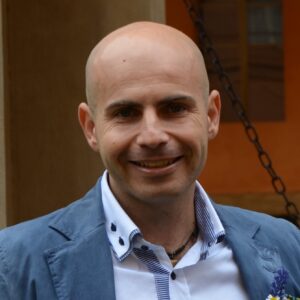
Fabio Sgolastra is an Associate Professor of General and Applied Entomology at the University of Bologna. Since 2002, his research has focused on the ecology and conservation of bees in agroecosystems, as well as on the enhancement of pollination services. He investigates the impacts of environmental stressors on bee health using a holistic approach. This includes assessing potential synergistic effects among different stressors under laboratory conditions and analyzing data from field monitoring studies, with the aim of improving environmental risk assessment and pollinator health protection. He serves as Vice-Coordinator of the Local Organising Committee and member of the Scientific Board of EurBee 11, which will be held at the Bologna Congress Centre from 7 to 10 September 2026.
Daniele Alberoni
Department of Agricultural and Food Sciences – University of Bologna, Italy
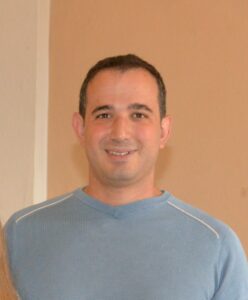
Daniele Alberoni is a researcher at the University of Bologna (Italy) since January 2023, working in the field of agricultural and environmental microbiology with a strong focus on pollinators. His research primarily investigates the microbial ecology of the gut microbiome of Apoidea, including Apis mellifera as well as solitary bees such as Xylocopa, Megachile, and other pollinators from Europe and South America. His work explores how anthropogenic stressors (e.g. antibiotics, xenobiotics, and climate change), dietary components, and pollen quality influence bee gut microbiota, immune responses, and overall pollinator health. In particular, he studies the impact of mono- and polyfloral pollen diets, microorganism-based feed additives, and pathogenic microorganisms, especially microsporidia of the genus Nosema, on host–microbiome interactions. In parallel, his research addresses soil–plant–pollinator microbial interactions, focusing on rhizospheric and endophytic microbiota, nectar secretion mechanisms, volatile organic compounds (VOCs), and the transfer of microorganisms from plants to pollinating insects.
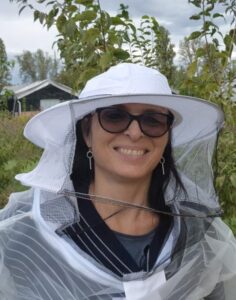
Cecilia Costa
CREA Centro di ricerca Agricoltura e Ambiente (Research Centre for Agriculture and Environment), Bologna, Italy
Cecilia Costa is a senior researcher at the Council for Agricultural Research and Economics (CREA) in Italy, where she has worked in apiculture and apidology since 2012. She holds a degree in Agricultural Sciences and a PhD in Agricultural Sciences and Biotechnology. Her research focuses on selective breeding and the conservation of honey biodiversity, with particular emphasis on improving colony health and resilience. Her main interests include breeding for disease resistance, especially against Varroa destructor; genotype–environment interactions, and the preservation and sustainable use of native honey bee subspecies, particularly the Italian Apis mellifera ligustica and A. m. siciliana, applying the “conservation via utilization” approach.
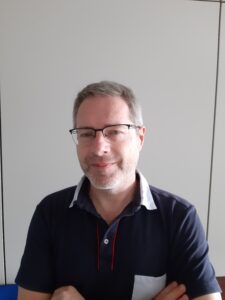
Luca Fontanesi
Department of Agricultural and Food Sciences – University of Bologna, Italy
He is a Full Professor of Animal Breeding and Genetics at the University of Bologna. His work focuses on animal genetics and breeding, animal genomics, and environmental genomic footprints. His research interests primarily lie in the application of genomics, metagenomics, metabolomics and phenomics in the animal production sector, including beekeeping, as well as environmental characterization through environmental DNA (eDNA) analysis. His research activities encompass all major livestock species, aquaculture species, wild and extinct animal species, honey bees and other insects. Additionally, he is specialist in the characterization of honey fingerprints based on eDNA analysis.
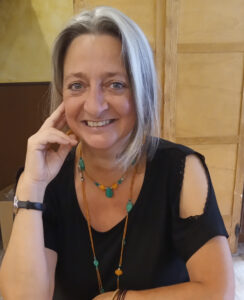
Manuela Giovanetti
CREA Centro di ricerca Agricoltura e Ambiente (Research Centre for Agriculture and Environment), Bologna, Italy
From a scientific perspective, I have built my career on the conviction that mobility, across research groups, countries, and disciplines, is a powerful engine for innovation. This mindset has allowed me to explore the behavioural ecology of Hymenoptera through an exciting variety of lenses: pollination ecology, endangered and invasive plants, chemical communication, food production, landscape ecology, and even socio-political dynamics. My recent roles have ranged from field and laboratory researcher to project manager of major national (BeeNet) and international (REALMed) initiatives. To date, I have authored more than 50 peer-reviewed publications (including one in PNAS), over 40 outreach and technical reports, and more than 80 conference contributions. My involvement in science policy, particularly at the European level, has been deeply enriching. I organized events for the Marie Curie Fellows Association (having received two Marie Curie Fellowships myself), served as an expert panelist at the EU2013 Research and Career Mobility Conference, and led a project on Dual Careers for Mobile Researchers selected for ESOF 2018. I also helped in the organization of EURBEE 03 (European Conference of Apidology), 15th EEF (European Ecological Federation Congress), EURBEE 09, IABEP 2024 (The International Association for Biomonitoring of Environmental Pollution).
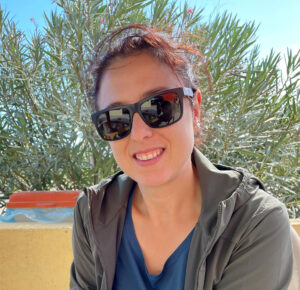
Serena Magagnoli
Department of Agricultural and Food Sciences – University of Bologna, Italy
Serena Magagnoli is a researcher at the Department of Agricultural and Food Sciences at the University of Bologna (Italy). Since the beginning of her PhD, her research has focused on pollinators and natural enemies across different habitats. Her work investigates methods and techniques aimed at protecting and promoting functional biodiversity, contributing to a deeper understanding of how habitat management practices influence the conservation of arthropod functional groups in various agroecosystems. Her research includes pollinator sampling activities targeting wild bees and hoverflies in agricultural, semi-natural, and natural areas to assess pollinator abundance and diversity. She also studies plant–pollinator interactions using network analysis and metabarcoding approaches. She is a member of the working group of pollinator experts established by the Italian Institute for Environmental Protection and Research (ISPRA). Her scientific output includes publications in international peer-reviewed journals with impact factors, as well as contributions to popular science journals and books.
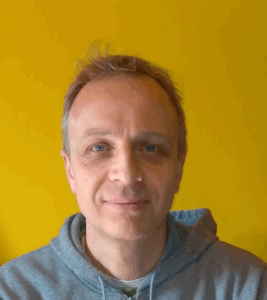
Piotr Medrzycki
CREA Centro di ricerca Agricoltura e Ambiente (Research Centre for Agriculture and Environment), Bologna, Italy
Piotr Medrzycki, PhD in Agricultural Entomology, is a senior researcher at the Council for Agricultural Research and Economics (CREA) – Research Centre for Agriculture and Environment, Bologna, Italy, where he established and still coordinates the bee toxicology laboratory. His research interests are related to honey bees and wild bees. The principal expertise is focused on the effects of pesticides to bees and, consequently, on the elaboration and validation of new methods for the assessment of these effects. He co-founded and co-coordinates APITOX – a task force of COLOSS (https://coloss.org), composed of independent scientists interested in bee toxicology. The mission of APITOX is to investigate the routes of exposure and the effects of environmental toxicants to bees, and to elaborate innovative methods for studying these mechanisms. He collaborates with international organisations involved in the studies of the effects of pesticides on bees, like OECD and EFSA. Other, but not less important expertise topics are related to the application of bees as bioindicators of environmental pollution by pesticides, heavy metals, organic pollutants, radionuclides and others and on the agroecology, principally the use of wild bees in crop pollination, protection of natural bee populations and elaboration of guidelines for bee-friendly agriculture.