
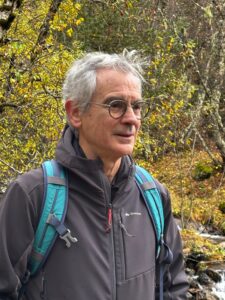
Domenica Auteri
European Food Safety Authority (EFSA), Parma, Italy
She is a biologist with a post-graduate degree in (eco)toxicology. She has been working in the field of environmental risk assessment of pesticides since more than 30 years. She joined the European Food Safety Authorities (EFSA) in 2008 as ecotoxicologist and, since 2011, she has been leading the team responsible for the evaluation of the risk of pesticides to non-target organisms and for the development of guidance documents. Among her activities, she has worked on the review of the risk assessment for bees of three neonicotinoids and fipronil, the development of the joint ECHA-EFSA guidance document to identify endocrine disruptors, the recent revision of EFSA guidance documents for Birds and Mammals and for Bees. She is currently leading strategically important, high-budget projects to advance the environmental risk assessment of pesticides, including pollinators. Finally, she is leading the revision of terrestrial ecotoxicology guidance document, which includes non-target arthropods, in-soil organisms and terrestrial non-target plants and the development of an approach for evaluating indirect effects of pesticides.
Keynote: ‘Safeguarding bees in the EU: Regulated risk assessment of pesticides and evolving policy’
Pesticides are regulated products undergoing comprehensive pre–marketing risk assessments to ensure their use does not pose unacceptable risks to human health or environment. Within the European Union, this process is governed by Regulation 1107/2009, which explicitly requires an evaluation of risks to bees and establishes that pesticides cannot be approved if they pose unacceptable risks. To perform this evaluation, EFSA developed a guidance document integrating methodologies to addresses multiple exposure pathways (contact, dietary), diverse effect type, different life stages and exposure scenarios. A pivotal aspect of the guidance was the establishment of specific protection goals: EU risk managers agreed on a maximum tolerable effect of <10% reduction in honeybee colony size. The 1107/2009 also consider reassessments when new scientific or monitoring evidence emerges. This mechanism led to the re-evaluation of neonicotinoids, resulting in a partial ban in 2013 and a complete ban in 2018. Post–authorisation use is governed by the Sustainable Use Directive, promoting Integrated Pest Management and reducing pesticide pressure. Complementary initiatives, including the EU Pollinator Initiative and new provisions under the Nature Restoration Regulation, strengthen pollinator monitoring and support long–term habitat restoration. Specifically, to implement the pollinator target, the EU adopted a Regulation, which establishes a science-based, standardised EU-wide monitoring for pollinator diversity and abundance.
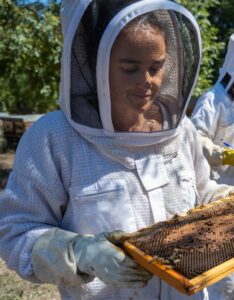
Jordi Bosch
CREAF, Centre for Ecological Research and Forestry Applications, Barcelona, Spain
Jordi is a researcher at the Centre for Ecological Research and Forestry Applications (CREAF) in Bellaterra (Barcelona, Spain). He works on solitary bee ecology. His research has enhanced the establishment of Osmia cornuta and Osmia lignaria as managed pollinators of orchard crops in Europe and North America, respectively. He has also investigated parental investment strategies and the life cycle ecophysiology of Osmia and Megachile. In the last years, his research has focussed on the sublethal effects of pesticides on solitary bee populations, and on the interactions between pesticide exposure and other stressors such as climate change and suboptimal nutrition. Jordi also works on pollinator community ecology in both natural and agricultural environments. He is studying how local and landscape factors affect taxonomic and functional diversity in pollinator communities and the structure of plant-pollinator and host-parasite interaction networks, as well as the consequences on pollination services.
Keynote: ‘Solitary bees in a toxic world’
Pesticide use is one of the main drivers of bee declines. However, our knowledge on the effects of pesticide exposure on bees comes mostly from studies with the highly social western honey bee, Apis mellifera, even though most bee species worldwide are solitary. Social and solitary bees experience different routes and levels of exposure and may differ in sensitivity to specific pesticides and vulnerability at the population level. Therefore, to better understand the effects of pesticide exposure on the full range of bee diversity, ecotoxicological studies on solitary bees are needed. Importantly, due to fundamental differences in behaviour and life history traits, some of the ecotoxicological methodologies used with honey bees cannot be readily applied to solitary bees. This presentation will provide an overview of the ecotoxicology program currently being developed at CREAF to improve our understanding of the impact of pesticide applications on solitary bees (Osmia spp.). In the last years, we have been conducting laboratory, semi-field and field experiments focussing on sublethal effects, exposure to combinations of pesticides and interactions between pesticides and other stressors, such as climate change and suboptimal diet. The results of these studies have important implications for pesticide risk assessment.

Björn Kristian Klatt
Halmstad University, School of Business, Innovation and Sustainability, Biology & Environmental Sciences, Halmstad, Sweden
Björn Klatt is a biologist and agricultural scientist interested in a framework of multiple topics related to bees and pollination. He is investigating aspects of how bee pollination benefits agricultural production but also how anthropogenic stressors, mostly land-use change, pesticides and climate change, alone and in interaction, affect bee individual fitness, communities, populations, biodiversity and pollination. Further, his research is addressing solutions to overcome these threats, often in the frameworks of agroecology and integrated pest and pollinator management, for instance how aquatic and terrestrial landscape elements support biodiversity, and how new strategies and tools can mitigate human impacts. This often requires multidisciplinary approaches as well as considering both animal and plant perspectives and not least the perspectives of farmers and authorities. Following his studies and diploma in Biology at multiple universities in Germany as well as the Museum of Natural History in Berlin and a nature reserve in Namibia, Björn Klatt conducted a PhD in agricultural sciences at the agroecology group at Göttingen university. He continued his scientific journey to Lund university in Sweden and finally to Halmstad university, where he is currently holding a position as associate professor in biology.
Keynote: ‘The 4th agricultural revolution – Rise of the bees?’
Bees and pollination are essential parts of agricultural production. However, during three so-called revolutions, agriculture went through periods of development and intensification which increasingly led to negative effects on natural ecosystems. Particularly, the third ‘Green Revolution’ was and is fostering strong declines of biodiversity, alone and in interaction with a changing climate. Also, bees and pollination are declining, although the importance of crops that benefit from pollination is increasing and thereby agriculture is undermining its own functionality. Hence, a transformative change of agricultural production systems is needed to maintain food security and simultaneously regain biodiversity and ecosystem services – a fourth agricultural revolution. The concept of agroecology can, if applied on large scales, become a game changer for the transformative change of agriculture. However, emerging climate change will challenge even nature-based systems such as agroecology, providing potential threats to its functionality. In my presentation, I will discuss the role of bees to contribute to a fourth agricultural revolution as a system-wide change based on the concepts of agroecology. Further, I will argue for how the plasticity of different bee-systems provide the potential to adapt to the challenges to solve under climate change and potentially even to counteract its impacts on agricultural production.
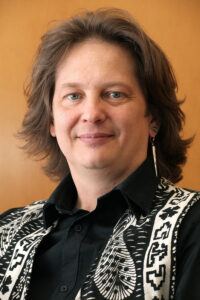
Fanny Mondet
INRAE, UR 406 Abeilles et Environnement, Avignon, France
Fanny Mondet is a researcher at the French National Institute for Agriculture, Food and Environment and co-leads the Bees and Environment research group. Her research centers on honey bee pathology, with a particular focus on host–parasite interactions between honey bees and Varroa destructor, one of the most detrimental threats to global apiculture. Combining chemical ecology and behavioral ecology approaches, she investigates the mechanistic basis of collective defense responses in honey bee colonies confronted with invasive parasites. Her work aims to elucidate the evolutionary and physiological processes underlying natural resistance to Varroa, bridging fundamental and applied research. By identifying key drivers of colony resilience, her research contributes to the development of sustainable and innovative strategies to mitigate parasite impact and support beekeepers in managing this major biological threat.
Keynote: ‘Honey bee health in the context of biological invasions: the case of Varroa destructor‘
The honey bee, Apis mellifera, is an iconic example of a socially living species of major economic importance that is increasingly threatened by invasive species in the context of globalization. The host shift of the parasitic mite Varroa destructor from Apis cerana to Apis mellifera has disrupted the evolutionary balance of the host–parasite relationship, severely compromising honey bee health and challenging beekeeping worldwide. Understanding the key biological processes underlying interactions between honey bees and this devastating parasite is essential for developing sustainable strategies to control Varroa and safeguard both honey bee health and the beekeeping sector. In this presentation, I will describe how recent advances in our understanding of Varroa reproductive biology and of the mechanisms by which honey bees detect and respond to infestation within the colony open new avenues for improved parasite management. I will place particular emphasis on our latest findings regarding social immunity processes, especially hygienic behavior. Using tools from chemical ecology, we provide new insights into collective defense mechanisms operating at both the individual and colony (superorganism) levels. These findings contribute to the development of integrated pest management strategies for Varroa and support the transition toward more sustainable beekeeping practices.

Janez Prešern
Agricultural institute of Slovenia, Department of animal production, Ljubljana, Slovenia
I am the leader of the Apiculture group and head of the Department of Animal Production at the Agricultural Institute of Slovenia. As a biologist with a strong physiology background, I utilise my broad knowledge to combine the efforts of colleagues from various disciplines in efficient bee science. Our work is based on two tiers: i) selection in honey bees with supporting activities and ii) feed, food and nutrition, which are linked to the performance of honey bee colonies and other pollinators and the effect of colony density. I have led several high-profile international and domestic projects, including the EAA & Norway Grants Fund for Regional Cooperation BeeConSel and ARIS SimDRONE. Within HE BEE-GUARDS, I lead a work package dedicated to the collection of data through various sensors, augmenting it with data from other sources, organising it, and finally piping it to the modellers for decision support services.
Keynote: ‘(Dis)Enchantment in digitalization in beekeeping‘
Technological advances are crucial in addressing agricultural challenges. The so-called ‘digital transition’, enshrined in EU strategy and aligned with the ‘Green Deal’, is being implemented through various funding initiatives across daily life, government administration, industry and agriculture including beekeeping. In the apiculture technology market, products are available that promise complete hands-off colony monitoring and pre-emptive diagnosis. However, the functionality of these devices is often unclear. Users have specific expectations when investing in such technology, including the usefulness of data and the intended recipients, whether beekeepers or scientists. Furthermore, the performance of these devices in the field is a critical consideration. To address these challenges, we conducted an analysis of online services and products, coupled with a survey of users to gather feedback. The analysis revealed that many platforms offer more than beekeepers require as guidance for their decisions. Additionally, there is a dependency on the service after purchasing a device. This raises the question of whether the push towards digitalisation in the sector is excessive, creating a dependency on a different type of service and incurring additional costs. Open science, encouraged through various funding schemes and community-based development, offers a potential solution to some of these challenges.
Oliver Schweiger
Helmholtz Centre for Environmental Research – UFZ, Department Community Ecology, Leipzig, Germany
Oliver Schweiger is the head of the Working Group ‘Macroecology for Animal Communities’, Department Community Ecology, at the Helmholtz Centre for Environmental Research – UFZ. His research covers multiple aspects of biodiversity focusing on the structure, dynamics and functions of ecological systems across a variety of temporal and spatial scales. In particular, he seeks to understand the effects of systematic variations in environmental conditions such as that of global change on functional, phylogenetic and taxonomic aspects of species assemblages as well as on species interactions and the provisioning of ecosystem services. He works at several disciplinary levels such as population genetics and dynamics, community ecology, ecosystem functioning, and macroecology. He is particularly interested in the effects of global change on pollinators across Europe and assesses their future risks but also options for risk mitigation and pollinator restoration.
Keynote: ‘How climate change threatens wild bees in manyfold ways‘
Climate change is one of the most important pressures for wild pollinators, particularly contributing to considerable concerns about their current declines. There are multiple ways how climate change can impact pollinators and a deeper understanding of these manyfold mechanisms is indispensable for successfully mitigating the respective risks and designing adequate restoration actions. Here, I provide an overview on different modes of action of climate change. Based on my research in multiple EU-funded projects, I show that direct impacts of continuous climate change lead to considerable range retractions of wild bees, which is further exacerbated in the future, ultimately causing shifts in functional bee assemblage composition and diversity hot and cold spots across Europe. In addition to continuous change, heat waves can also lead to considerable population declines and even local extinctions of wild bees, depending on species traits. I also show indirect effects of climate change such as negative impacts on plant-pollinator networks via extinction cascades, increased bee virus pressure, or options for pathogen invasion. Finally, I provide evidence for land-based options to mitigate both direct and indirect effects of climate change on wild bees, which are particularly relevant for the current implementation of the EU Nature Restoration Regulation.