Petr Bogusch
University of Hradec Kralove, Faculty of Science, Department of Biology, Czech Republic
Associate Professor at University of Hradec Kralove, Department of Biology. Main research interests are conservation biology of native bees, wasps and other pollinators, taxonomy and phylogeny of cuckoo bees and ecology of hymenopteran guilds nesting in galls, shells, etc. Member of main European projects connected with pollinators – ORBIT, PULSE, EPIC-Bee, PollHab. Co-author of both European Red Lists of Bees and books on bees and wasps and insect hotels. Current research topic deal mainly with pollinators of crops and invasive plants and trap nests and insect hotels.
Gennaro Di Prisco
CNR-IPSP, The Italian National Research Council – Institute for Sustainable Plant Protection – Laboratory of Apidology – P.le E. Fermi, 1 – 80055 Portici (NA), Italy
MD in Agricultural Sciences and Technologies with specialization in Ecology and Environment (2006). PhD in Agrobiology and Agrochemistry with a specialization in General and Applied Entomology (2009). During his post-doctoral research, he investigated the effects of biotic and abiotic environmental stressors, such as Varroa mites, viruses, and pesticides on honey bees. He subsequently worked as a fixed-term researcher at CREA – Agriculture and Environment, where he studied the impact of agricultural practices on honey bee and bumblebee populations. Since 2021, he has been a permanent researcher, and since 2023 a senior researcher, at the Institute for Sustainable Plant Protection of the National Research Council (CNR-IPSP), where he coordinates the Laboratory of Apidology. His researches focuses on pollinator ecosystem services to support of ecological and sustainable agriculture, with particular emphasis on: (i) honey bee immune resilience to environmental stressors through nutritional management using molecular and AI-based approaches; (ii) monitoring the morpho-molecular biodiversity of pollinators in agro-ecosystems; and (iii) using honey bees as bioindicators to monitor environmental pollutants associated with human activities.
Edy Fantinato
Ca’ Foscari University of Venice, Department of Environmental Sciences, Informatics and Statistics, via Torino 155, 30172 Venezia
Edy Fantinato is a plant ecologist specialising in plant reproduction and pollination interactions. He is an Associate Professor at Ca’ Foscari University of Venice. His work focuses on animal-mediated pollination, with particular emphasis on the evolutionary selection of plant traits, the resulting consequences for ecosystem diversity, and the spatial and temporal dynamics of interaction networks across different ecosystems, including natural and semi-natural grasslands, coastal dunes, and saltmarshes. He has participated in international and national research projects as principal investigator, member of scientific coordination teams, or project partner. Through research on habitat restoration for pollinators and the sustainability of beekeeping under climate variability, his work has increasingly integrated applied perspectives. In particular, the LIFE PollinAction project and the Italian PRIN Honey BeeVolatility project have combined fundamental ecological research with practical approaches to pollinator conservation and management, with a specific focus on interactions between managed honey bees and wild pollinators.

Anna Gajda
Warsaw University of Life Sciences, Institute of Veterinary Medicine, Laboratory of Bee Diseases, Poland
Doctor Anna Gajda is a head of the Laboratory of Bee Diseases at the Institute of Veterinary Medicine in Warsaw University of Life Sciences. She is a veterinarian specializing in honey bee diseases and a beekeeper. As an assistant professor she researches both managed and wild pollinator health problems. She studies interactions between different pathogens and their influence on pollinator health and longevity, as well as the spillover of pathogens between species and its consequences for the pollinator landscape. Anna Gajda is teaching at the Faculty of Veterinary Medicine of Warsaw University of Life Sciences in both Polish and English. She is an extensionist, giving talks as an invited speaker during conferences, courses and beekeeper meetings in many European countries. She also often serves as an advisor for veterinary doctors and beekeepers in the field of bee health. For 8 consecutive years she was an active Executive Committee member of the CoLoss network. She is also a member of Management Committee of Polish Scientific Board for Beekeeping. She is a part of a “Pollinator Advisory Board” working for the Polish Ministry of Climate and Environment, as well as “Honeybee Advisory Board” working for the Polish Ministry of Agriculture. She serves as an expert for the Polish Office for Registration of Medicinal Products, Medical Devices and Biocidal Products, as well as for Information Processing Center – National Research Institute (OPI PIB), European Funds for a Modern Economy (FENG) program.
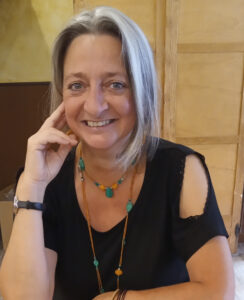
Manuela Giovanetti
CREA Research Centre for Agriculture and Environment, Bologna, Italy
Manuela Giovanetti’s primary focus lies within the behavioural ecology of Hymenoptera. She investigated how females use signals to find food, how landscape ecology can explain food selection, how alien plant species disrupt or support local pollination networks. Her study-subjects span from solitary to social bees and wasps alike, investigating foraging, mating, reproduction and intra-specific interactions. She included into her analyses tools as GIS to map habitats and genetic analysis to track paths towards social evolution. A two-time Marie Curie Fellowship recipient, she also established a significant footprint in European science policy. Her experience across various countries and research groups served as a baseline to contribute shaping the careers of researchers across Europe, by working to ensure that “mobility” is sustainable and supported. She was invited as expert panelist at the EU2013 Research and Career Mobility Conference and leaded a symposium on “Dual Careers for Mobile Researchers” at ESOF 2018. Her presence in the international arena is marked by her collaboration of high-profile international conferences, including EURBEE (03 and 09), the 15th European Ecological Federation Congress, and IABEP 2024. Her expertise is supported by a robust publication record of scientific papers (including in PNAS), technical reports (in national languages) and outreach publications.
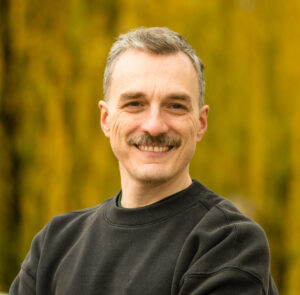
Fabio Manfredini
University of Milan, Department of Food, Environmental and Nutritional Sciences (DeFENS), Milan, Italy
Fabio Manfredini is an evolutionary ecologist interested in understanding how behaviour is regulated in insects in different scenarios, from social evolution to invasion ecology and host-parasite associations. Dr Manfredini combines a range of experimental approaches to address these questions that range from in-person field observations to experimental manipulation in the lab and molecular analysis to understand how behaviour is regulated at the level of genes and genomes. Dr Manfredini established his research group in 2020 at the University of Aberdeen (Scotland) where he held a position as a Lecturer in Functional Genomics, and then moved in 2025 to the University of Milan (Italy) to start as an Associate Professor of General and Applied Entomology. Much of the research in Dr Manfredini’s group centres around the ecology and physiology of social insects like the honeybee Apis melllifera, where a special focus is dedicated to the understanding of the implications of viral infections at the cognitive level. Another line of research focuses on different species of bumblebees, including those that are used commercially for the pollination of important crops (e.g., Bombus terrestris) and species that are instead of conservation concerns (e.g., the great yellow bumblebee Bombus distinguendus).

Francesco Nazzi
Dipartimento di Scienze agroalimentari, ambientali e animali – Università degli Studi di Udine – Via delle Scienze 206, 33100 Udine, Italy
Francesco Nazzi is full professor of entomology at the University of Udine where he teaches “Apidology and Apiculture” and “Zoology”.
He graduated in Natural Sciences at the University of Padua and obtained a PhD from the University of Udine. He has been a researcher at the University of Udine, Marie Curie Fellow at Rothamsted Research (UK) and visiting scientist at various european research institutions.
His research activity, testified by several published contributions, has been mainly devoted to the biology and health of honey bees.
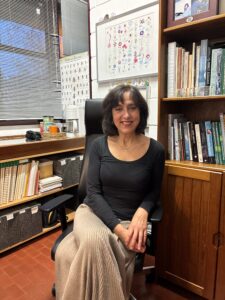
M. Alice Pinto
Mountain Research Centre, Bragança Polytechnic University, Portugal
Alice Pinto is a Professor at the Instituto Politécnico de Bragança (IPB) and a researcher at the Mountain Research Centre (CIMO), Portugal. She obtained her PhD in Entomology from Texas A&M University (USA), where her interest in honey bee genetics began while studying colonies living in natural tree cavities. Her research expertise lies in honey bee population genetics and genomics, with a focus on understanding the evolutionary processes shaping genetic diversity across subspecies. In particular, her work aims to assess the genetic integrity of subspecies and to uncover the molecular basis of local adaptation using whole-genome approaches. Pinto has led and collaborated on numerous national and international projects addressing population genomics and conservation of honey bees, as well as the evolution of their enemies. She has also contributed to the development of innovative tools, including wing-image–based methods for subspecies identification and SNP-based approaches to quantify genetic introgression. She has published extensively in peer-reviewed scientific journals and beekeeping magazines and works closely with researchers and beekeepers to promote the conservation of locally adapted honey bee populations. She and her team are regular participants in EURBEE, where they consistently present numerous scientific contributions.

Soledad Sagastume
Instituto Regional de Investigación y Desarrollo Agroalimentario y Forestal de Castilla La Mancha- Centro de investigación Apícola y agroambiental (IRIAF-CIAPA). Laboratory of Bee Pathology. Spain
Soledad Sagastume is a geneticist and pharmacist from Spain who works as a researcher at the Centro de investigación Apícola y agroambiental (CIAPA) in Marchamalo, Spain, which forms part of Instituto Regional de Investigación y Desarrollo Agroalimentario y Forestal de Castilla La Mancha (IRIAF). Throughout her career, she has combined work in the health field, teaching and research, carrying out several studies on the molecular genetics of the honey bee pathogen Nosema ceranae. She is currently studying the genetics of honey bees, particularly molecular markers related to cellular stress. Her studies focus on the resilience and resistance of different honeybee subspecies to stress factors derived from climate change. She also participates in projects investigating the genetic variability of Varroa destructor and its possible resistance to acaricide treatments. She has published several research papers in scientific journals and collaborates with other experts in the field at a national and international level.
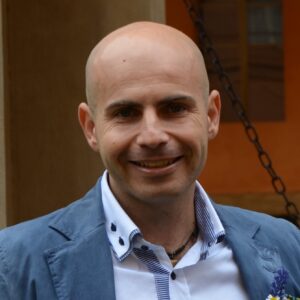
Fabio Sgolastra
Department of Agricultural and Food Sciences – University of Bologna, Italy
Fabio Sgolastra is an Associate Professor of General and Applied Entomology at the University of Bologna. Since 2002, his research has focused on the ecology and conservation of bees in agroecosystems, as well as on the enhancement of pollination services. He investigates the impacts of environmental stressors on bee health using a holistic approach. This includes assessing potential synergistic effects among different stressors under laboratory conditions and analyzing data from field monitoring studies, with the aim of improving environmental risk assessment and pollinator health protection. He serves as Vice-Coordinator of the Local Organising Committee and member of the Scientific Board of EurBee 11, which will be held at the Bologna Congress Centre from 7 to 10 September 2026.
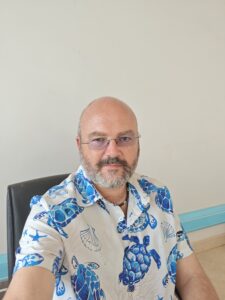
Thomas Tscheulin
University of the Aegean, Department of Geography, Laboratory of Biogeography and Ecology, Mytilene, Lesvos Island, Greece.
Thomas Tscheulin is an Associate Professor of Spatial Ecology in the Department of Geography at the University of the Aegean in Greece. He earned a BSc and MSc in Biology from the University of Freiburg in Germany and a PhD in Population Ecology from Imperial College London.
His research focuses on relating the abundance, diversity, and trophic interactions of invertebrates (especially wild bees) to various ecosystem disturbances. He has extensively studied the impacts of agricultural practices, climate change, wildfires, and invasive species on pollinator communities.
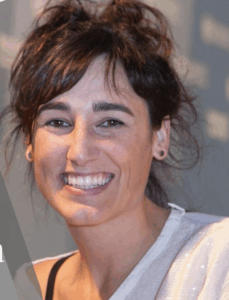
Iratxe Zarraonaindia Martínez
1-University of the Basque Country (EHU), Department of Genetics, Physical Anthropology and Animal Physiology, Applied Genomics and Bioinformatics group, Leioa, Spain
2-IKERBASQUE, Basque Foundation for Science, Bilbao, Spain.
Zarraonaindia is an Ikerbasque Research Associate at the Department of Genetics, Physical Anthropology and Animal Physiology at the University of the Basque Country (EHU, Spain). She conducted her postdoctoral research (2012–2015) at the Bioscience Division of Argonne National Laboratory (Chicago, USA), where she acquired extensive expertise in environmental microbiology and Next Generation Sequencing based bioinformatics by joining the Earth Microbiome Project, a large-scale international collaborative initiative aimed at characterizing microbial life on Earth. In 2016, Zarraonaindia joined the Applied Genomics and Bioinformatics group at EHU, where she has recently become the lead investigator, bringing over 10 years of experience in metagenomics and microbial ecology research.
She currently applies omics approaches to investigate the impact of anthropogenic activities on apiculture, with the aim of advancing the understanding of microbe–host interactions, the influence of management practices and environmental factors at the holobiont level, and the role of microbial communities in disease resistance and honeybee resilience. Her research ultimately contributes to the development of environmentally friendly alternatives and to reducing apiculture’s dependency on agrochemicals.